Low-Profile Car Mesh Node: DIY 915 MHz MeshCore Build
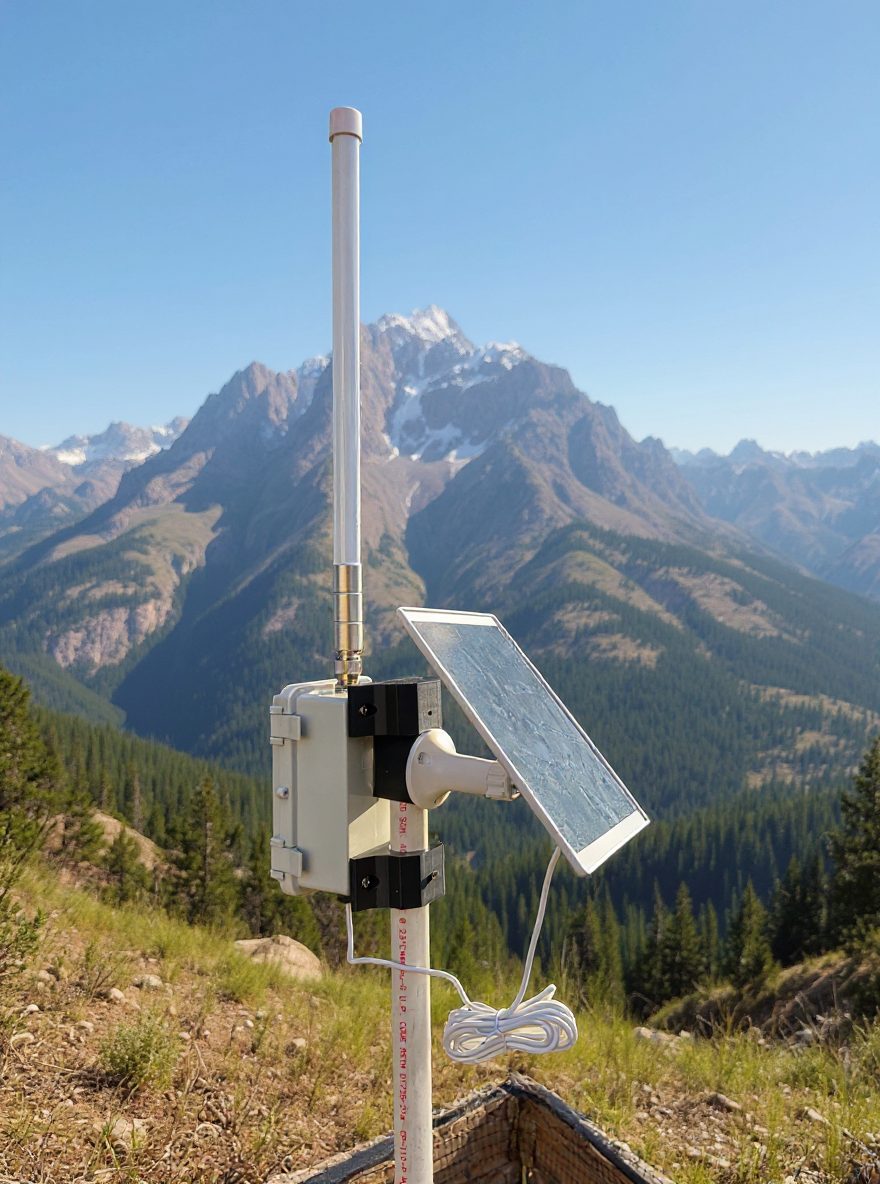
A low-profile car mesh node is a small MeshCore radio on your vehicle, with a short outdoor 915 MHz antenna, magnets to hold it in place, and two small solar cells to keep its battery topped up. Ours is built on a RAK19003 WisBlock Mini.
It gives your phone a much better antenna than the one inside your pocket node while you drive between Bryan, College Station, and the ranch roads around the Brazos Valley. Here's the parts list we use, with every part linked and prices checked on Nov 1, 2026.
Quick answer
Use a RAK WisBlock Mini kit (RAK19003 + RAK4631, US915) in a 3D-printed housing. Run a U.FL to N-female bulkhead pigtail through the lid and screw a compact 915 MHz N-male omni on top. Add a JLJLUP 103450 LiPo (2000 mAh), two 5 V 200 mA mini solar cells wired in parallel to the RAK's solar jack, and neodymium bar magnets to hold it to the roof or trunk lid.
Flash MeshCore companion firmware so it pairs with your phone over Bluetooth. The hardware also runs Meshtastic. Around Bryan–College Station, we recommend MeshCore, because that is what our local repeaters run.
Parts list
- RAK WisBlock Mini starter kit, US915: Amazon or Rokland, about $31.97
- Compact outdoor 915 MHz omni antenna, N-male, 18 cm (Slinkdsco): Amazon, about $12.95
- Alternative: the genuine ALFA AOA-915-2ACM 2 dBi mini antenna (N-male) at Rokland, about $14.97
- U.FL to N-female bulkhead pigtail, 2-pack: Amazon, about $9.59 for two
- 5 V 200 mA mini solar cells, 110 x 60 mm, 10-pack (you use two): Amazon, about $20.99
- JST ZH 1.5 mm 2-pin connectors with leads, 10 sets (for the RAK solar jack): Amazon, about $7.99
- Neodymium bar magnets, 60 x 10 x 3 mm, 25-pack (you use four): Amazon, about $18.99
- JLJLUP 103450 LiPo, 2000 mAh, JST PH 2.0 mm plug, built-in protection circuit, 2-pack: Amazon, about $16.99 for two (sold out? try this PKCELL 803860 2000 mAh LiPo at Rokland, $12.97 — slightly bigger at 60×38×8 mm vs ~50×34×10 mm; still check polarity)
- 3D-printed housing, which we print in ASA for heat and UV
Consumables
- M2 heat-set inserts: Amazon, about $5.99 · M3 heat-set inserts: Amazon, about $9.99
- Gorilla Clear Grip to bed the magnets and solar cells: Amazon, about $5.99 (sold out? try this Gorilla Clear Grip 3 oz 2-pack, $15.47 — general-purpose contact adhesive, not the Diamond Art & Jewelry bottle)
- Zinsser Bulls Eye shellac spray as a sealing coat on the printed surface: Amazon, about $14.96 (sold out? try this Bulls Eye clear shellac 12 oz spray from another seller, $28.28 — same product, about twice the price)
- Thin wire, solder, and heat-shrink
Antenna: compact, N-type, screwed straight on

The car build uses a compact outdoor 915 MHz omni from Slinkdsco. It is about 18 cm long, outdoor-rated, and has an N-male connector. The listing claims 5 dBi and an SWR of 1.2 or better at 915 MHz. We have not measured either. It is short enough to clear a garage door on most cars and stiff enough to stay upright at speed. A few Amazon reviewers compare it favorably with the ALFA, and one says it did not work for them on 915 MHz. Test yours before you trust it.
If you would rather have a name-brand antenna, the ALFA AOA-915-2ACM from Rokland is much shorter, about 22 mm across and 64 mm tall per Rokland's spec sheet, with the same N-male connector. It is rated at 2 dBi and costs about $14.97. Buying from an established dealer like Rokland matters, because fake ALFA 915 MHz antennas have turned up on other marketplaces.
The antenna screws onto a U.FL to N-female bulkhead pigtail mounted through the top of the housing. The U.FL end clicks onto the RAK4631's LoRa jack, not the Bluetooth jack. That keeps it to one short cable and no adapters. Our SMA vs RP-SMA vs N-type guide explains why we like N-type outdoors.
Power: one LiPo and two small solar cells


The battery is a JLJLUP 103450 LiPo, 2000 mAh (7.4 Wh), about 34 x 10 x 52 mm. It has the JST PH 2.0 mm plug that RAK's datasheet specifies for the battery jack, and the listing says it has a built-in protection circuit. It comes as a 2-pack, so you have a spare. Check polarity before you plug it in. The steps are in the build list below. Sold out? Try this PKCELL 803860 2000 mAh LiPo at Rokland ($12.97); it is a bit bigger (60×38×8 mm vs ~50×34×10 mm), Rokland calls it RAK starter-kit compatible, and you still need to check polarity.
Two 5 V 200 mA mini solar cells sit flat on top of the housing. Wire them in parallel, not in series. Two in series would be about 10 V, and RAK lists 5.5 V as the maximum on the solar jack. Solder one of the JST ZH 1.5 mm leads to the pair and plug it into the RAK's solar jack. Before you plug it in, measure the pair's open-circuit voltage in full Texas sun. Small "5 V" cells can read above their label with no load. If yours read over 5.5 V, add a small regulator.
Be realistic about what these cells do. Reviews are mixed, and one buyer measured only 20–25 mA per cell. On a car parked in the sun all day, they slow the battery drain or top it off. They will not keep up with heavy use on their own. Plug the node into USB-C now and then.
Magnets and mounting

Four 60 x 10 x 3 mm neodymium bar magnets are glued into pockets in the base of the housing. A few things we have learned:
- Put a thin layer of tape, cloth, or the print itself between the magnets and the paint. Bare magnets scratch clear coat.
- Reviews of these magnets say the strength varies from batch to batch. Test the hold by hand, and add a tether if you'll be driving at highway speeds.
- Take it off before a car wash, and don't mount it on aluminum or composite panels. Magnets need steel.
Heat: the big Texas caveat
A car roof in a Brazos Valley August is about the worst place you can put a lithium battery. Most LiPo pouch cells are only rated to charge up to about 45 °C. Check your cell's listing. Charging hotter than that wears the cell out and can be unsafe. Most LiPo cells also shouldn't be charged below 0 °C. RAK lists the board itself at −35 to +75 °C, but its datasheet does not list any battery temperature cutoff, so the solar cells will keep charging a hot battery. What we do:
- Print the housing in ASA, a light color if you can. PLA softens in a hot car.
- Leave a little air gap between the battery and the top of the housing.
- On hot days, cover the solar cells or bring the node inside. Parking in shade helps too. If a pouch cell swells, retire it.
Companion or repeater?
We set it up as a companion. It pairs with the phone inside the car over Bluetooth and sends your messages from a better antenna than the one in your pocket. MeshCore repeaters work best at fixed spots. MeshCore direct messages learn a path through specific repeaters, so a repeater that moves around keeps breaking those paths. Our repeater vs companion vs room server guide covers the difference.
Build steps
- Flash MeshCore companion firmware. Go to flasher.meshcore.io, pick the RAK4631, and choose Companion (Bluetooth). Set USA/Canada (Recommended) using our preset guide.
- Bench test with the antenna attached. Never transmit without one. Send a message as described in how to send your first MeshCore message.
- Print and prep the housing. Set the heat-set inserts, glue in the magnets, and give the outside a sealing coat of shellac. Zinsser rates its shellac for interior surfaces, so for a housing that lives outside on a car, add a UV-resistant clear coat rated for outdoor use on top.
- Install the bulkhead, then the board, then click the U.FL lead onto the LoRa jack.
- Solar cells. Wire them in parallel, meter them in full sun, then plug into the solar jack.
- Battery last. Check polarity before you plug in. The JLJLUP uses a JST PH 2.0 plug that fits the RAK19003's battery jack. The listing doesn't say which side of the plug the red wire is on, though, and JST battery wiring is not standardized. RAK's battery connector diagram in the RAK19003 datasheet shows GND on the pin nearest the board's edge and VBAT (+) on the inner pin, toward the USB-C port. Make sure the red wire lands on VBAT. If it is backwards, lift each pin's small latch tab with a needle, slide both pins out of the plug, and swap them. A reversed battery can damage the board. Then plug it in and close the housing.
- Road test. Drive a loop you know, such as Texas Avenue to Highway 6, and see which repeaters your companion hears.
FAQ
What do I need to build a low-profile car mesh node?
A RAK WisBlock Mini kit, a compact N-male 915 MHz antenna with a U.FL to N-female bulkhead pigtail, a JLJLUP 103450 2000 mAh LiPo with a JST PH 2.0 plug, two 5 V mini solar cells in parallel, four neodymium magnets, and a printed housing. Flash it with MeshCore companion firmware on USA/Canada (Recommended).
Will the magnets hold at highway speed?
We can't promise a highway hold for every car, and magnet strength varies by batch. Test the pull by hand, and use a tether for highway driving.
Can the solar cells run the node by themselves?
Not reliably. Two small cells help in a sunny parking lot, but expect to charge over USB-C sometimes, especially if you use the node a lot.
Is it OK to leave it in a hot car?
The board is rated to 75 °C, but LiPo cells should not charge much above 45 °C. In summer, park in shade or bring the node inside.
Should I use the Slinkdsco antenna or the ALFA?
Both are compact N-male 915 MHz antennas. The Slinkdsco costs a little less. The ALFA AOA-915-2ACM is the name brand. We have measured neither, so pick by budget and test on your own drive.
Related
- 915 MHz antenna upgrade guide
- Best handheld vs rooftop antenna for MeshCore
- MeshCore repeater vs companion vs room server
Gear links
- RAK WisBlock Mini starter kit: Amazon · Rokland
- Compact 915 MHz N-male omni (Slinkdsco) · ALFA AOA-915-2ACM (Rokland)
- U.FL to N-female bulkhead pigtail
- 5 V 200 mA mini solar cells
- JST ZH 1.5 mm 2-pin leads
- Neodymium bar magnets
- JLJLUP 103450 2000 mAh LiPo, 2-pack (sold out? PKCELL 803860 2000 mAh)
- Consumables: M2 inserts · M3 inserts · Gorilla Clear Grip (sold out? Clear Grip 3 oz 2-pack) · Zinsser shellac (sold out? Bulls Eye shellac alt)
Prices were checked on Nov 1, 2026, and they move. Check each product page before you order.