Prebuilt Solar MeshCore Repeater vs DIY: What's Worth It
Is a prebuilt solar MeshCore repeater worth it, or should you DIY? Buy a turnkey kit like the RAK WisMesh Repeater Mini when you want solar coverage up this weekend. Build your own when you need more battery reserve, a stronger outdoor antenna, or a box you can service and Texas-proof yourself.
Around Bryan–College Station, we run both. Neighbors who just want a roof or fence-post node online often buy a finished solar repeater. Builders who care about antenna height, coax length, and cloudy-week reserve still reach for a RAK WisBlock Mini and an 18650 pack. Prices below were checked on Nov 5, 2026. Stock moves, so recheck the product pages before you buy.
Quick answer
- Want solar with the least soldering? Buy the RAK WisMesh Repeater Mini ($99.97 at Rokland on Nov 5, 2026; sold out right now, so see the alternatives below). It packs a RAK4631 radio, a 3200 mAh battery, an integrated solar panel, an IP67 enclosure, and an antenna on RP-SMA. It runs MeshCore or Meshtastic; around BCS we recommend MeshCore.
- Want more reserve, a better antenna, or a GOAT-style filter and RTC? Follow our DIY solar MeshCore repeater parts list. A careful 2x parts buy lands in roughly the same neighborhood as the WisMesh Mini once you count the outdoor antenna and box. The first cart costs more because holders and vents come in multi-packs.
- Skip bargain outdoor solar kits with weak reviews. We are not recommending the Elecrow outdoor solar nodes; their Amazon ratings were mixed to poor when we checked.
Height and line of sight still matter more than the kit vs DIY choice. Put the antenna high and clear first, then pick the power package that matches how much wrench time you want. Our where to put a MeshCore repeater checklist covers siting; what a rooftop repeater changes explains why height matters.
What you are paying for in a prebuilt
A finished solar MeshCore repeater is not just a radio. You are buying:
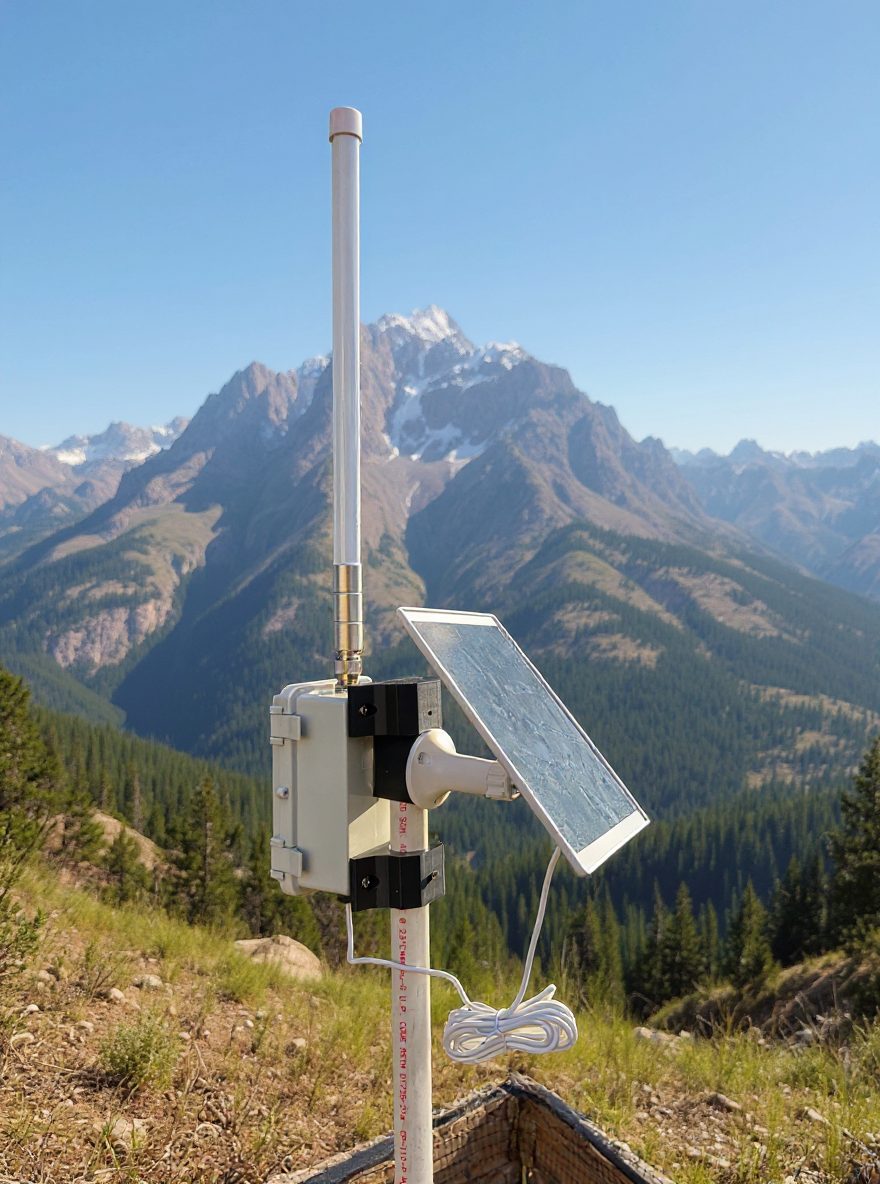
- A sealed outdoor box and mounts
- A solar panel sized for that radio
- Batteries and charge protection already wired
- An antenna (usually a short rubber whip) and a short RF lead
- Firmware already flashed, or at least a supported flash path
That is the real product. The LoRa board inside is often the same class of nRF52840 + SX1262 hardware you would buy for a DIY build.
RAK WisMesh Repeater Mini (our prebuilt pick)
The RAK WisMesh Repeater Mini is the finished solar box we'd point you to first; it's sold out at Rokland right now, so see the alternatives below. Rokland listed it at $99.97 on Nov 5, 2026. It packs:
- RAK4631 radio (nRF52840 + SX1262)
- 3200 mAh battery pack
- Integrated solar panel
- IP67 enclosure
- Included antenna on RP-SMA
- MeshCore or Meshtastic firmware
Rokland sells it ready for Meshtastic. The RAK4631 appears on flasher.meshcore.io as "RAK WisBlock / WisMesh (RAK 4631)", so you can flash MeshCore Repeater on USA/Canada (Recommended) before it goes up. If you're joining the Bryan–College Station mesh, we recommend MeshCore.
 Sold out at Rokland right now? Alternatives (prices as of Nov 15, 2026): SenseCAP P1-Pro for MeshCore (Amazon) ($139.99; Seeed Studio $100.99 as of Nov 17, 2026), SenseCAP P1-Pro for Meshtastic (Amazon) ($139.99; Seeed Studio $101.99 as of Nov 17, 2026), or the KEEPTEEN D5L-R1 5W solar repeater with RAK19007 + RAK4631 (Amazon, third-party seller) ($119).
Two gotchas before you order:
- The antenna connector is RP-SMA, not plain SMA. Buy the right adapters or pigtails if you upgrade to a fiberglass outdoor antenna.
- Lithium charging still has a temperature window. Do not treat “solar” as “safe to charge a frozen pack,” and do not mount a sealed box where afternoon Texas sun cooks the cells. Seal the antenna joint and add a drain hole for BV humidity. Our heat, humidity, and lightning guide covers shade, vents, and storm paths.
High-power Mini variants raise the power-budget questions we cover in do you need a 1-watt mesh node?. You are paying roughly $100 so you do not have to source a box, panel, pack, protection board, glands, and mounts. For most first outdoor sites in BCS, that trade is fair.
What you are paying for in a DIY build
DIY is not automatically cheaper on day one. You are paying in parts and in hours:
- Choosing a radio that idles well on solar (we use the RAK WisBlock Mini / RAK19003)
- Building a protected 18650 pack (Panasonic/Sanyo NCR18650GA cells in our published list)
- Picking a 5 V 6 W or 8 W panel and verifying its open-circuit voltage before you connect the board
- Drilling an IP-rated box for a bulkhead, breather vent, and glands
- Flashing MeshCore Repeater on USA/Canada (Recommended) and bench-testing before it goes up
Our published DIY solar MeshCore repeater guide has three tiers:
- 2x — two 18650s, 6 W panel, small IP65 box. Good for most fence posts and low roofs.
- 6x — six cells and an 8 W panel for longer gray stretches.
- GOAT — bigger box, optional cavity filter, RAK12002 RTC, and pole mounts for backbone sites.
A careful 2x parts buy often lands near a WisMesh Mini once you add a real outdoor antenna. The first shopping cart is higher because battery holders, vents, and pigtails sell in packs. A second DIY repeater is cheaper. The GOAT build costs more on purpose: you are buying filter isolation, clock survival after a power dip, and room to service the pack.
If you build on a RAK19003, remember it has no battery temperature cutoff, so don't let it charge cells below 0 °C.
Cheap Harbor Breeze-style solar yard lights still tempt builders who want a panel and box for a few dollars. That path is its own project, with battery chemistry and charge-controller limits you have to verify yourself. Our $5 Harbor Breeze solar node build walks through it.
For summer heat math and panel sizing without a full parts list, see build a solar mesh node that survives summer heat.
Side-by-side: what the money buys
Buy prebuilt if you want:
- One shipment, one mount session
- Batteries and charging already designed as a system
- Firmware already flashed, or a supported MeshCore flash path (WisMesh Mini)
- Less time on polarity checks and gland sealing
Build DIY if you want:
- A taller outdoor antenna on an N-type bulkhead instead of the included rubber whip
- Two or six cells sized for your worst week, not the kit’s default pack
- A light-colored, vented box you can open without fighting a glued assembly
- Optional extras (cavity filter, RTC, outside USB-C) that kits do not include
- Parts you can replace one at a time when something fails
Neither kit nor DIY replaces placement. A $100 solar node under the eaves will lose to a plain board on a clear mast. Scout height first, then spend.
How we would choose around Bryan–College Station
- First outdoor repeater, this month: RAK WisMesh Repeater Mini, flashed with MeshCore. Mount it high, and upgrade the antenna later if the included antenna is the weak link.
- Long cloudy stretches: DIY 6x from the parts guide, since the Mini’s 3200 mAh pack is a smaller buffer than a six-cell build.
- Pole or noisy RF site: DIY GOAT from the parts guide, or a prebuilt plus a measured antenna upgrade and a sane lightning path from the Texas-proofing post.
- Still shopping for a pocket companion: start with a finished handheld from first MeshCore node under $70, then add solar coverage once you know where the gap is.
Rather buy one ready from us?
The Brazos Valley Mesh Solar Repeater Mesh Node is our turnkey solar option. For a pocket companion while you decide on solar, our Pocket Mesh Node is flashed with MeshCore or Meshtastic, your choice. If you're joining us around Bryan–College Station, we recommend MeshCore. Buying gear anywhere is fine. Buying from the Brazos Valley Mesh shop helps fund the local mesh.
FAQ
Is a prebuilt solar MeshCore repeater worth it vs DIY?
Yes, if your goal is coverage this weekend with less assembly. A kit like the RAK WisMesh Repeater Mini packages the panel, battery, enclosure, and radio. DIY wins when you need more battery reserve, a better outdoor antenna, or a serviceable Texas-proof box.
How much is the WisMesh Repeater Mini?
Rokland listed the RAK WisMesh Repeater Mini at $99.97 on Nov 5, 2026, though it is sold out right now. Prices and stock move, so recheck the live page before you buy.
Does the WisMesh Repeater Mini run MeshCore?
Yes. Rokland ships the Mini with Meshtastic pre-installed, and its RAK4631 appears on flasher.meshcore.io as "RAK WisBlock / WisMesh (RAK 4631)". Flash MeshCore Repeater on USA/Canada (Recommended) and bench-test it before it goes up. Around Bryan–College Station, we recommend MeshCore.
Is DIY actually cheaper?
Sometimes on the second build, not always on the first. A basic DIY 2x with an outdoor antenna often lands near a WisMesh Mini once packs and multi-pack consumables are counted. DIY pays off when you want antenna, filter, RTC, or battery choices the kits do not offer.
Do I still need a better antenna on a prebuilt?
Often, yes. Kits ship with short stock antennas. An outdoor fiberglass antenna on a short low-loss feed, mounted higher than the box, is the usual upgrade. Watch the connector: the WisMesh Mini uses RP-SMA, so check gender before you buy an antenna or adapter.
Related
- DIY solar MeshCore repeater: RAK19003 and 18650 build
- Build a solar mesh node that survives summer heat
- Heat, humidity, and lightning: Texas-proofing a solar repeater
- What a rooftop repeater changes on a local mesh
- Where to put a MeshCore repeater: height and line of sight
- Do you need a 1-watt mesh node?
- First MeshCore node under $70